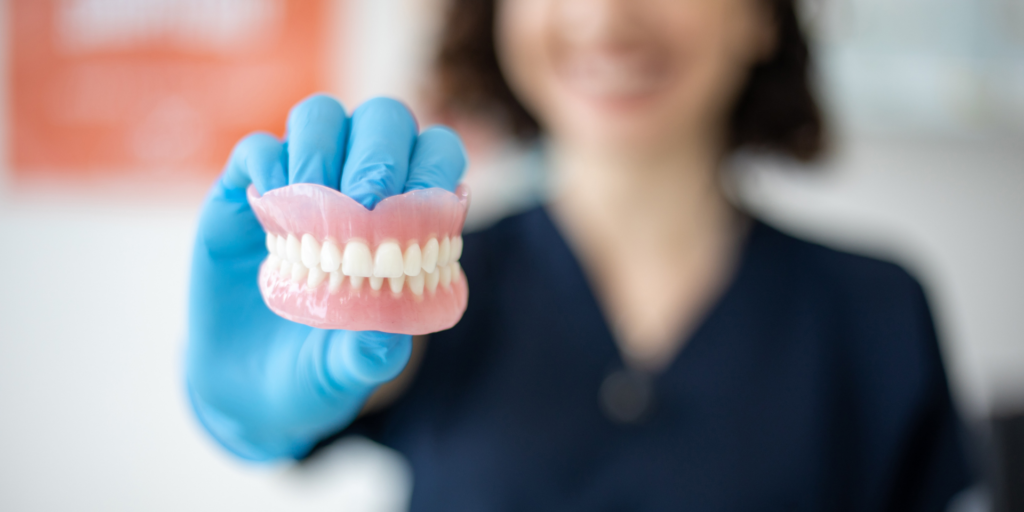
ฟันปลอม คือ ฟันเทียมที่นำมาใส่ทดแทนฟันที่สูญเสียไป เพื่อป้องกันปัญหาฟันล้ม และแก้ปัญหาการบดเคี้ยว นอกจากนี้ยังช่วยเพิ่มความมั่นใจในรอยยิ้มและใช้ชีวิตประจำวันอีกด้วย
ฟันปลอมถอดได้ โดยหลัก ๆ แบ่งได้เป็น 2 ประเภทใหญ่ ตาม “วัสดุและโครงสร้าง” แบบติดแน่น (Fixed Prosthesis) และ แบบถอดได้ (Removable Prosthesis)
สรุปจำนวนครั้งในการทำฟันปลอม
| time | details | Approximate time |
|---|---|---|
| 1st time | Check, plan, take dental impressions | 30–60 minutes |
| 2nd time | Dental preparation / detailed impression | 1–2 hrs. |
| 3rd time | Try-in | 30–60 minutes |
| 4th time | Wear real dentures | 1–2 hrs. |
| 5th time (if any) | Check the results / Follow up | 15–30 minutes |
Overall, it takes about 2–4 weeks, depending on the type of denture and the complexity of the case. * The procedure may vary depending on the oral condition and tooth structure of each individual.
1. ฟันปลอมถอดได้ฐานอะคริลิก (Acrylic Removable Denture)
ลักษณะ
• ฐานสีชมพู ทำจากอะคริลิก
• ฟันเป็นฟันอะคริลิก
• มักมีตะขอเกี่ยวฟันธรรมชาติ (ถ้ามีฟันเหลือ)
Who is it suitable for?
• คนที่ฟันหายหลายซี่ หรือหายทั้งปาก
• คนที่งบประมาณจำกัด
• ใช้เป็นฟันปลอมชั่วคราวหลังถอนฟัน
ข้อดี
• ราคาย่อมเยา
• ทำได้รวดเร็ว
• ซ่อมและเติมฟันภายหลังได้ง่าย
ข้อเสีย
• หนา ใส่แล้วอาจรู้สึกเกะกะ
• ความแข็งแรงน้อยกว่าแบบโครงโลหะ
• การยึดติดไม่แน่นเท่า อาจหลวมเมื่อใช้ไปนาน
2) ฟันปลอมถอดได้โครงโลหะ (Metal Framework / Cast Partial Denture)
ลักษณะ
• มีโครงโลหะ (เช่น Cobalt-Chromium)
• ฐานบางกว่า แข็งแรงกว่า
• มีตะขอโลหะเกี่ยวฟันธรรมชาติ
เหมาะกับใคร
• คนที่ยังมีฟันธรรมชาติเหลือหลายซี่
• ต้องการฟันปลอมที่แข็งแรงและใช้งานระยะยาว
ข้อดี
• บาง ใส่สบายกว่า
• แข็งแรง ทนทาน
• กระจายแรงบดเคี้ยวได้ดีกว่า
ข้อเสีย
• ราคาสูงกว่าแบบอะคริลิก
• ตะขอโลหะอาจมองเห็น ไม่สวยงาม
• ซ่อมแซม/เติมฟันทำได้ยากกว่า
General steps and number of times used
1st time: Assessment, planning and impression taking
What it does:
- Take a medical history, examine your oral health, gums, and teeth.
- Take a smile photo and X-ray (if necessary).
- Digital Impression
- Plan with the patient to choose the type of denture (fixed or removable).
Some cases may require root canal treatment, tooth extraction, or root planing before dentures can be made.
2nd time: Tooth preparation and frame testing
What it does:
- for Fixed dentures: Tooth grinding to prepare for crowns or bridges.
- for Removable dentures: Detailed oral impression and occlusion measurement
- Send the data to the lab to produce the denture frame.
- Next appointment to try metal/acrylic frame.
3rd time: Try-in
What it does:
- Try on the denture frame and check the fit and occlusion.
- Check the color and shape of your teeth to make them look natural.
- Adjusted according to patient and doctor opinions
- Confirm the final design to produce the actual piece.
4th time: Insert real dentures and adjust them.
What it does:
- Wear real dentures (fixed/removable)
- Check occlusion, pronunciation, and function.
- Customize and polish
- Recommend methods of maintenance and cleaning
5th time (if any): Check and follow-up.
What it does:
- Check the occlusion and fit of the teeth.
- Correct pressure points (in removable dentures)
- Evaluate usage and provide additional recommendations.