
Creating beautiful smiles with gentic care.

Smile Art Pattaya is open Monday - Sunday 10:00 AM - 7:00 PM. Closed on Wednesdays.

Full mouth rehabilitation

Smile Art Pattaya

Full mouth rehabilitation

Full Mouth Rehabilitation is a treatment that combines several approaches to address overall dental, gum, and occlusal problems. It's not just about treating each tooth individually, but about restoring the entire oral system to its natural beauty, strength, and function.

Summary of the time required for full mouth dental restoration

step period
Diagnosis and planning 1–2 weeks
Oral preparation 2–4 weeks
Dental restoration and alignment Several months–1 year
Permanent implant placement and occlusion adjustment 1–2 months
Long-term follow-up and care continuously
Total average treatment 6–24 months


Treatment procedures

1. Diagnosis and planning (1–2 weeks)

  • Thorough oral health examination
  • Photographs, X-rays, impressions and 3D scans
  • Analysis of occlusion, chewing, and facial structure
  • Plan treatment together with the patient, possibly with a smile design to see the results in advance.


2. Oral preparation (2–4 weeks depending on the condition of the teeth)

  • Treat gum disease, remove tartar and root planing.
  • Extraction of teeth that cannot be saved
  • Root canal treatment (if necessary)
  • Prepare the gums and bone to support the restoration.


3. Dental restoration and alignment (takes several months to 1 year, depending on the case)

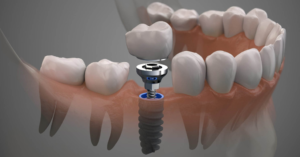
  • Dental implants: For those who have lost some or all of their teeth.
  • Dental Crowns/Veneers: Restore the shape, color, and function of a tooth.
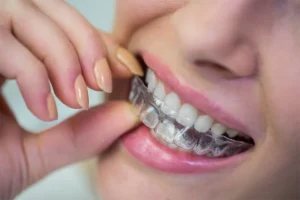
  • Orthodontics or Clear Aligner: In some cases, orthodontics may be required to adjust the bite.
  • Dental fillings or inlays/onlays: Repair worn or decayed teeth.


4. Insertion of permanent workpiece and adjustment of occlusion (1–2 months)

  • After the teeth and gums are ready, a permanent crown, veneer, or bridge will be placed.
  • Adjust the bite to be appropriate so that chewing is natural and does not cause further wear and tear.


5. Long-term follow-up and care

  • ผู้รับบริการต้องมาพบทันตแพทย์เพื่อตรวจเช็กเป็นระยะ
  • Maintain strict oral hygiene.
  • Wear a retainer or device to prevent teeth grinding (if at risk).


Total treatment duration

  • Small–medium cases: 6–12 months
  • Complex cases (e.g., requiring multiple dental implants): 12–24 months or more


Who is suitable for Full Mouth Rehab?

  • People who have lost several teeth or all of their teeth
  • Tooth decay, wear, cracking, or severe bite problems
  • People who have worn out old dentures and find them inconvenient to use and want stronger, more permanent teeth.
  • People with chewing problems or abnormal jaws
  • Those who want to restore their entire smile for confidence


summarize

Full Mouth Rehab is not just for aesthetic reasons, but also to restore balance to the entire oral system, including bite, chewing, and gum health. Treatment takes an average of 6 months to 2 years, depending on the condition of each person's teeth. The result is a confident smile and strong, functional teeth that are as close to natural as possible.


Reviews of this service

Frequently asked questions

Frequently Asked Questions about Orthodontics Treatment for Adults

How long does braces take?

reply: โดยทั่วไปใช้เวลา 1 – 3 ปี ขึ้นอยู่กับสภาพฟัน ความซับซ้อน และโครงสร้างกระดูกของแต่ละคน หากมาตามนัดสม่ำเสมอ ฟันจะเคลื่อนตัวเร็ว และจบการรักษาตามกำหนด

reply: This is not necessary in all cases. It depends on the space in the mouth. If the teeth are crowded or too crowded, the dentist may recommend extracting some teeth to open up space. However, if the teeth are aligned properly, extraction is not necessary.

reply: Regular appointments are made every month, taking 15-30 minutes each time to adjust the wire, change the rubber bands, or increase the tension. If you miss the appointments frequently, the treatment will be prolonged.

reply: Teeth can move back, so you must wear a retainer, especially during the first 6 months, which should be worn every day as advised by your dentist to maintain the beautiful position of your teeth.

reply: The braces are not painful when being fitted, but after adjusting the wires, you may experience some tightness or slight soreness in your teeth for the first 2–3 days. This is normal and can be relieved with pain medication prescribed by your doctor.

Frequently asked questions about general dentistry: fillings/scaling/extractions

Does a tooth filling hurt and how long does it take?
reply: Dental fillings are usually painless because local anesthesia is administered if the cavity is deep. The procedure takes 20 to 40 minutes per tooth, depending on the size and location of the cavity.
reply: It is very important because tartar causes gum inflammation and bad breath. It should be done every 6 months to 1 year to prevent gum disease and maintain good oral health.

reply:

  • Simple teeth: 20 – 30 minutes per tooth

  • Impacted teeth or multi-rooted teeth: 40 – 60 minutes
    The dentist will take an X-ray first for safety.

reply: You should bite on a gauze pad to stop the bleeding, rest, and avoid hot or spicy foods. Avoid sucking on straws or rinsing your mouth vigorously for 1-2 days to prevent recurring bleeding.

reply:

  • Tooth filling: Do it when you have tooth decay.

  • Scaling: Every 6 months – 1 year

  • Tooth extraction: Do it when necessary, such as for severe tooth decay, impacted teeth, or when preparing for braces.

Frequently Asked Questions about Dental Implants

How long does it take to get a dental implant?

reply:

  • 1 implant: about 3–6 months

  • Overdenture support: about 3–6 months

  • All-on-4/All-on-6: If using the fast loading technique, temporary teeth can be inserted within 1 day But permanent teeth take time. 3–6 months

A: On average, 5 times for all types (examination/planning → surgery → wound check → impression → denture insertion).

reply:

  • 1 artificial root: In some cases, a temporary bridge may be used.

  • Overdenture: Use regular dentures first, then switch to root-lock dentures.

  • All-on-4/6: Most can have temporary teeth inserted immediately (quick loading).

reply: During the surgery, local anesthesia is used, so there is no pain. There is only swelling and tightness for 2-3 days after the surgery, which is usually relieved with pain medication prescribed by the doctor.

reply: If taken care of well (brushing, flossing, and checking every 6 months), dental implants can last. 10–20 years or more

Frequently Asked Questions about Veneers and Crowns

How many veneers does it take?
reply: Generally, 2–3 visits are required (including examination, planning, tooth grinding, and actual veneer placement) and a 4th visit may be required for follow-up, depending on the condition of the teeth and the number of teeth being treated.

reply: ไม่จำเป็นค่ะ ขึ้นอยู่กับสภาพฟัน และความต้องการของแต่ละบุคคล เช่น คนฟันงุ้มไม่จำเป็นต้องกรอฟัน คนฟันยื่น ฟันบิ่นจำเป็นต้องกรอ

reply: ไม่ค่ะ เพราะทันตแพทย์จะใส่ Tฟันชั่วคราวให้ ซึ่งมีลักษณะใกล้เคียงกับฟันจริง และยังสามารถทดลองรอยยิ้มได้

reply: ขึ้นอยู่กับชนิด และวิธีการดูแลรักษาของแต่ละบุคคล

reply:

  • Avoid biting hard or very sticky foods.

  • Brush and floss your teeth as usual.

  • Come check everything 6 months To check the occlusion and condition of the veneers.

Frequently asked questions about Invisalign

What is the difference between clear braces and metal braces?

reply:

Depending on the complexity of the tooth:

  • Small case: approx. 6–12 months

  • Moderate–complex cases: Approx. 12–24 months

reply: In general, clear aligners are not very painful. You may feel a little tight or pressure during the initial stages of changing the aligners, but this will gradually improve within 1–2 days.
reply: For best results, the appliance should be worn for 20–22 hours/day and removed only when eating or cleaning the teeth.
reply: Clear braces are virtually invisible, removable, and easier to clean than fixed metal braces, making them ideal for more complex cases and less expensive.

Frequently asked questions about full mouth rehabilitation

Who is suitable for full mouth dental restoration?
reply: Suitable for people with multiple dental problems such as lost teeth, worn, decayed, broken teeth, abnormal bite, or those who wear dentures and find them inconvenient to use.
reply: The total time depends on the complexity of each case, but typically it takes 6–12 months for moderate cases and 12–24 months or more for complex cases.
reply: Each case is considered differently and includes diagnosis and planning → oral preparation → dental restoration (e.g., implants, crowns, veneers, orthodontics) → permanent placement and long-term follow-up.

Frequently Asked Questions about Interceptive Orthodontics

Why do you have to get braces when you're still a child, even though you still have baby teeth?
reply: Because during the period when children are growing, it is easy to correct the jaw structure. If left untreated, it may take a long time and be much more complicated when they grow up.
reply: Children may use removable appliances, jaw expanders, or fixed appliances, depending on their dental problems and age.
reply: The mixed dentition period (approximately 7–12 years old) is the most appropriate time because it allows for good control of the direction of tooth and jaw growth.
reply: Retainers must be worn strictly, visits to the dentist as scheduled, and children must be taught how to properly clean their teeth. If neglected, teeth may become crowded or misaligned again.

Frequently asked questions about fixed/removable prosthesis

What is the difference between fixed dentures and removable dentures?
reply: Fixed dentures are permanently fixed and do not require removal. They function similarly to real teeth. Removable dentures can be removed for cleaning, but may be less stable than fixed dentures.
reply: On average, fixed dentures last 10–15 years or more if properly cared for, while removable dentures last about 5–10 years before needing adjustment or replacement.
reply: Fixed dentures allow you to chew food similar to your real teeth, while removable dentures may require some adjustment, but once you get used to them, you can use them normally.
reply: It typically takes 2–4 appointments (approximately 2–4 weeks) depending on the type of denture, number of teeth, and complexity of the case.
reply: Fixed dentures should be cared for like real teeth. Brush, floss, and visit your dentist regularly. Removable dentures should be removed, cleaned daily, and stored properly to prevent deformation.

Make an appointment and contact us

Easily book a consultation appointment or receive service. through all channels

Whether it is a consultation or receiving dental services Book an appointment with us easily via Line, phone or online form. Convenient, fast, respond quickly to every step.

Business hours

Monday to Tuesday

10:00–20:00 hrs.

Wednesday

Closed

Thursday

10:00–19:00

Friday

10:00–20:00

Saturday to Sunday

10:00–19:00

Book an appointment/consultation/review here!

Smile Art Pattaya | คลินิกทันตกรรมครบวงจร ทำฟัน จัดฟัน รากฟันเทียม พัทยา

Smile Art Pattaya: สร้างรอยยิ้มสวย มั่นใจ ด้วยการดูแลที่อ่อนโยนและเชี่ยวชาญ

ช่องทางโซเชียล